The average home office is not an office. It is the short wall of a bedroom, the corner of a living room, a landing wide enough for a desk if the desk is honest about its size. We know because we build for those rooms, and because the letters we get rarely ask which desk is best. They ask which desk fits.
The full answer runs in a fixed order: measure the space you actually have, pick the desk shape that uses it best, choose the chair second instead of first, and keep cables, paper and the printer from eating the room. Everything below stands on real measurements, ours where the piece is ours, and on the classic workspace guidance where health enters into it.
Measure the room before you admire a desk
Every cramped workspace we have ever been asked to fix started the same way: the desk was chosen from a photograph, and the room was asked to cope. Reverse it. Three numbers decide everything, and a tape measure gets you all three in five minutes.
First, the wall run: the straight stretch where the desk will stand, minus anything that opens into it. A door that swings across the space, a radiator, a closet that needs its arc, all of it comes off the usable length. Second, the sit-back zone: from the desk edge you need roughly two feet for the chair and your body in it, plus a few inches to slide back and stand. If a bed or a couch sits behind you, measure to it honestly. Third, the walk-past: if the room's traffic passes behind the desk, another couple of feet keeps every trip from being a squeeze.
The desk you can sit at comfortably is the one the tape measure approved before the photograph did.
Write the three numbers down before you shop. A 48 inch desk on a 50 inch wall technically fits and practically does not, because drawers need opening room and elbows need margin. Leave an inch or two spare at each end and the desk reads as chosen, not wedged.
Pick the shape that matches the corner
Small-space desks come in four honest shapes, and each solves a different room. We build all four, so this comparison has no side to take.
| Shape | Fits best | Typical size | The trade-off |
|---|---|---|---|
| Straight compact | Any clear wall run | 32 to 48 inches | Least surface, easiest to place |
| L-shaped corner | A corner two walls share | 39 to 53 inches per side | Uses dead corner space, harder to move later |
| Standing, electric | A dedicated work wall | Around 48 inches | Needs an outlet and cable slack |
| Rolling compact | Rooms that change their mind | Around 19 inches | Small top, but it parks in a closet |
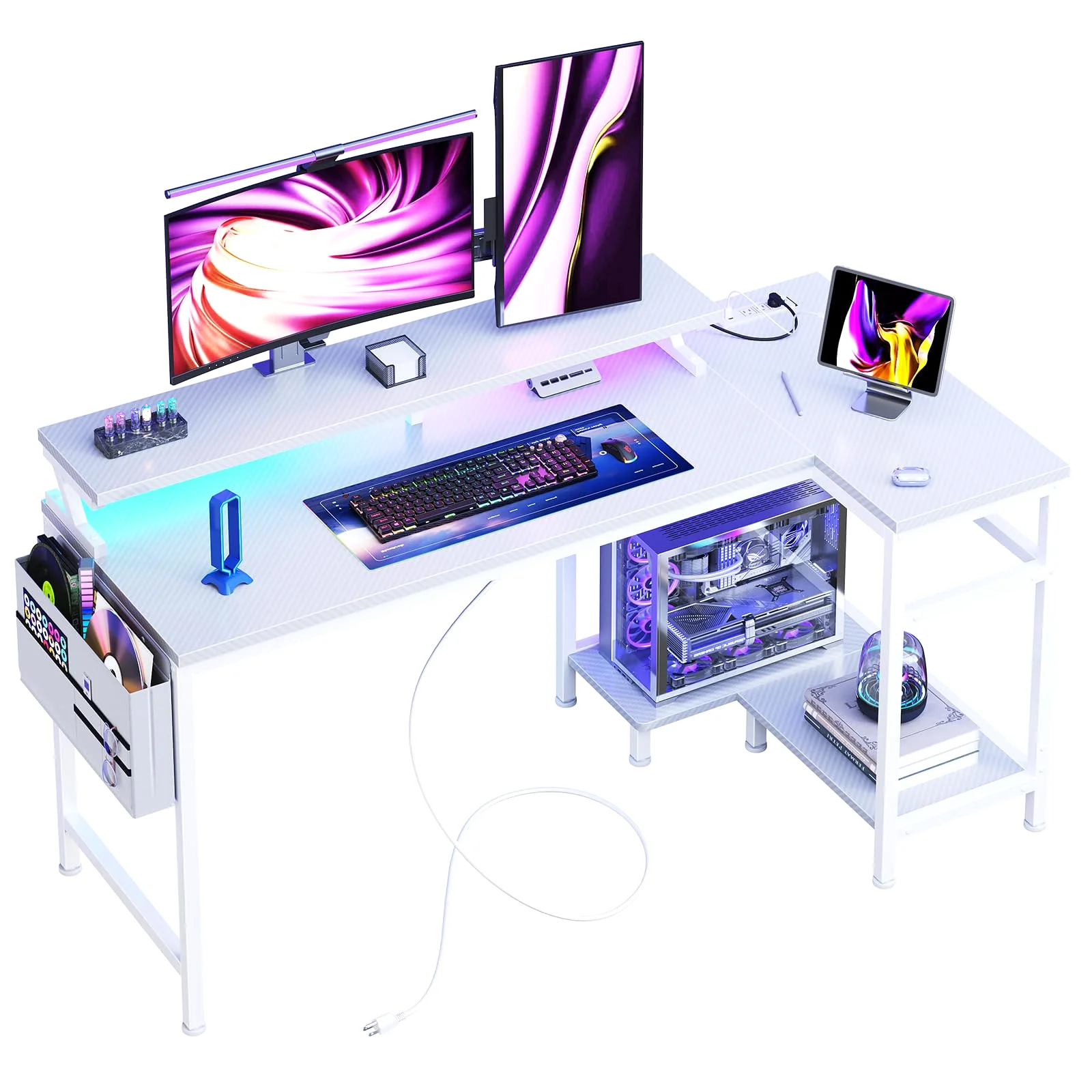
The straight desk is the default for a reason: it goes where the wall is, and at 32 to 40 inches it fits walls other desks refuse. The L-shape is the small room's secret weapon, because corners are usually wasted anyway. Put the long side under the window, the short side against the dark wall, and you have two work zones from one footprint. A reversible L-desk earns its keep here, letting the long side go left or right depending on the corner you actually own.
Standing desks pull their weight in small rooms precisely because the same footprint serves two postures. Public workspace guidance keeps coming back to changing position through the day, and an electric desk with memory presets makes the change a button press instead of a renovation. The rolling desk, finally, is the honest answer for a room that cannot give up floor space permanently: it works at the couch, then parks.
Choose the chair for the desk you bought
Chairs fail in small rooms for one reason: armrests. A chair that cannot slide fully under the desk permanently occupies its sit-back zone, and the room loses two feet it never had spare. This is not a small detail. It is the difference between a bedroom with a workspace and a bedroom with a chair in the way.
An armless task chair slides in to the seat post and disappears under the top between work sessions. If you sit cross-legged, and a remarkable share of the people writing to us do, a wide armless seat handles the position without a knee hanging off each side. Where your day is long calls and you want lumbar support and arms, take the supportive chair and give it a desk with more clearance: measure from the floor to the desk's lowest crossmember and compare it against the chair's armrest height before buying either.
Whatever the chair, set it by the classic anchor points. Mayo Clinic's ergonomics guidance puts it simply: feet flat on the floor or on a rest, thighs parallel to the floor, elbows close to the body with arms resting gently, and the monitor about an arm's length away with the top of the screen at or slightly below eye level. On a small desk that last rule matters most, because the temptation is to push the screen to the back edge and lean in toward it all day.
Give the paperwork a home on wheels
The desk is not the workspace. The workspace is the desk plus everywhere the work spills, and in a small room the spill has nowhere to hide. The fix that works in practice is vertical and mobile: storage that stacks upward and rolls out of the way.
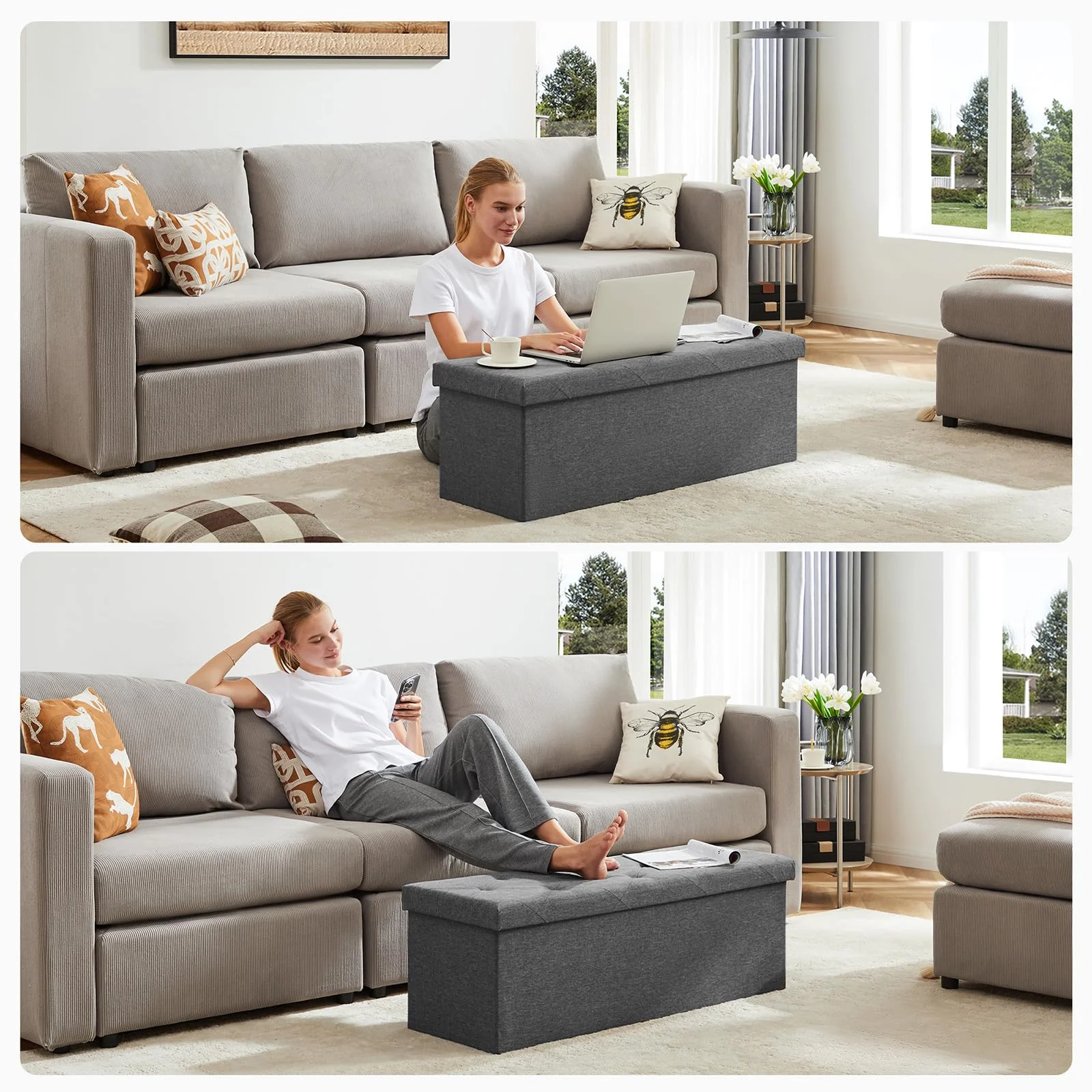
A rolling file cabinet under or beside the desk holds the paper, the chargers and the label maker, then slides away when the room goes back to being a bedroom. Ours doubles as a printer stand, because the printer is the single object most likely to end up on the floor otherwise. A bookshelf turns a foot and a half of floor into five shelves of wall, and a folding storage ottoman is the small room's utility player: seat for a guest, lid for the cable bin, footrest on the long calls.
Cables deserve one deliberate hour. Everything that can hang under the desk should, a power strip mounted to the underside clears the floor for the vacuum, and the charging clutter moves off the desktop entirely if your nightstand carries a built-in charging station on the other side of the room. The desk surface is for the work in progress, and every object that lives there permanently is rent the room pays daily.
Three rooms, three floor plans
Theory is cheap, so here are the three rooms we are actually asked about, with the plan that works in each.
The bedroom short wall is the most common home office in the world. The wall usually runs 40 to 60 inches between the closet and the corner, and the working recipe is a straight desk at 32 to 48 inches, an armless chair that vanishes under it, and vertical storage beside rather than above. If the bed sits close behind, the armless chair is not a preference but a requirement, because the sit-back zone and the walking lane are the same two feet. People who work here tell us the discipline that matters most is the shutdown: laptop closed, chair under, desk clear. The desk stops being an office at seven, and the room lets you sleep.
The living room corner wants the L-shape. Two couch-less walls meeting at ninety degrees are dead space in most living rooms, and a 39 to 53 inch corner desk turns them into the largest work surface a shared room can host without dominating it. Face the corner and the room disappears while you work, which is either the feature or the bug depending on your temperament. Put the monitor on the corner diagonal, keyboard square to it, and the two wings become staging: inbox papers on the left, the current project on the right. A low bookshelf capping one wing keeps the work contained to its corner instead of migrating to the coffee table.
The multi-purpose room, the guest room that is also the office that is also the gym, belongs to furniture with wheels. A rolling desk and a rolling file cabinet mean the office exists from nine to six and stops existing when the guests arrive. This is also where the folding ottoman earns its double life: workday footrest, guest-night seat, year-round cable garage. The test for every purchase in a room like this is one question, where does it go when the room changes jobs, and any piece without a good answer will eventually be the piece you resent.
The standing desk question, answered honestly
Every small-office plan now has to answer whether the desk should stand. Our answer, as a company that sells both kinds: stand if you will actually use the travel, and be honest with yourself about it.
The case for standing is movement, not standing itself. The public guidance on desk work returns to the same point from every angle, OSHA declines to name one correct posture and the National Library of Medicine's advice is to keep changing position, and a height-adjustable desk makes the change cost nothing. That matters more than it sounds. A desk you must clear and crank will stay at one height forever, while an electric desk with memory presets moves because moving costs one button.
The case against is honest too. A standing desk needs an outlet within cable reach and a few spare inches of wall for the frame's travel. The cheapest fixed desk beats the cheapest wobbling standing desk every time, so if the budget forces the choice, buy the solid fixed desk and stand up on your own schedule instead. And a rolling laptop desk delivers half the benefit for a fraction of the footprint, since raising the work to counter height and standing at it is still a change of position.
If you do go electric, two settings pay for the desk. Set the sitting preset by the elbow rule, forearms level with the surface, and the standing preset the same way, elbows at your sides, forearms level, shoulders down. The number on the display is irrelevant. The elbows are the measurement.
What fits where: our range against the tape measure
Because the letters keep asking, here is the short reference we wish every buyer had before choosing, our own desks lined up against the walls they fit.
| If your clear wall is | The desk that fits | What you give up |
|---|---|---|
| Under 36 inches | 32-inch writing desk | Second monitor, spread-out paper |
| 36 to 44 inches | 40-inch compact desk | Not much, this is the sweet spot |
| 44 to 52 inches | 48-inch desk with drawers | Nothing, drawers replace a cabinet |
| A true corner | 39 to 53-inch L-shape | Easy rearranging later |
| No permanent spot | 19-inch rolling desk | Surface area, but it parks anywhere |
Read the last column as seriously as the first. Every desk is a trade, and the small room punishes the trade you did not notice you were making. The 48 inch desk with drawers, for instance, quietly replaces a separate cabinet, which returns more floor than the extra inches consume. The L-shape returns the most surface per square foot of any shape and is also the piece you will least enjoy moving to another room, so it belongs in the corner you are sure about.
One more number people forget: depth. A desk 15 to 20 inches deep against the wall leaves lane enough in rooms where a full 24 inch top would not, and with a monitor arm or a laptop stand, shallow works better than its reputation. The arm's-length screen distance still lands fine, because the guidance measures from your eyes, not from the wall.
Light, outlets and the two mistakes everyone makes
Two placement mistakes account for most of the regret letters we read. The first is putting the desk where the outlet is, instead of where the light is. An extension cord solves electricity, and nothing solves facing a dark corner all day. Put the desk near the window if you can, side-on to it so the screen does not fight the glare, and let the cord do the walking.
The second is buying the desk with the tallest hutch the wall can hold. Vertical storage above the desk photographs beautifully and looms in person, especially in a bedroom where you also sleep next to it. In a small room, keep the tall storage on the wall you do not face from bed, and keep the desk itself low and open. The room will feel bigger than the square footage says, and the workspace will still be there when you close the laptop.
A setup order that works
If you want the whole guide as a sequence, this is the order that avoids re-buying anything.
- Measure the wall run, the sit-back zone and the walk-past, and write them down.
- Choose the desk shape from the room, straight for a wall, L for a corner, rolling for a room that changes jobs.
- Choose the chair for the desk: armless if it must tuck away, supported if your day is long and stationary, and check clearance either way.
- Set the heights by the elbow rule and the screen by the arm's-length rule, then clear the floor under the desk completely.
- Add storage vertically and on wheels, one file cabinet and one shelf before any second piece of desk furniture.
- Spend the deliberate hour on cables, and only then decide whether anything else is actually missing.
Most rooms stop at the fifth step. The ones that continue usually need a second chair for a partner, or a monitor arm, not more furniture.
Quick answers
How small can a real desk be? Our smallest fixed desk is 32 inches wide and people write theses at it. Below about 30 inches a desk holds a laptop and a mug, which is fine if that is the honest job description.
Is an L-shaped desk worth it in a small room? In a true corner, yes, nothing else returns more surface per square foot. Against a flat wall, no, the second wing just blocks the lane and a straight desk serves better.
Do I need a standing desk to follow the movement advice? No. The advice is to change position often, and standing up, walking to refill a glass and sitting back down satisfies it free of charge. The electric desk makes the change easier, and easier changes happen more often.
What about working from the bed or the couch? As a break position it is fine. As the main workspace it fails the elbow rule and the screen rule at once, and your neck files the complaint by evening. A 19-inch rolling desk beside the couch fixes most of it for less than a chiropractor visit.
Which single purchase improves a bad small office most? Almost always the chair, second the light. The desk is usually not the problem, and the storage can wait a month while you find out what actually piles up.
Get the measurements right, match the shape to the corner, keep the chair armless if space is the constraint, and put the storage on wheels. A small room does not need a small ambition. It needs furniture that respects arithmetic, and that is the kind we build.
Keep reading
- How to Sit Cross-Legged at a Desk, Comfortably and Without Guilt. What posture guidance actually says, the seat measurements that decide everything, and how to set up a chair for the way you already sit.
- Bedroom Storage That Works: Nightstands, Dressers and the Wall. Sizing a nightstand honestly, what fabric drawers trade, why bed height is a storage decision, and the ten-minute anchoring job that finishes a dresser.
- Or go back to the DUMOS catalog and the best sellers on the front page.
